

Introduction
Tata Harrier EV Review & Analysis 2025
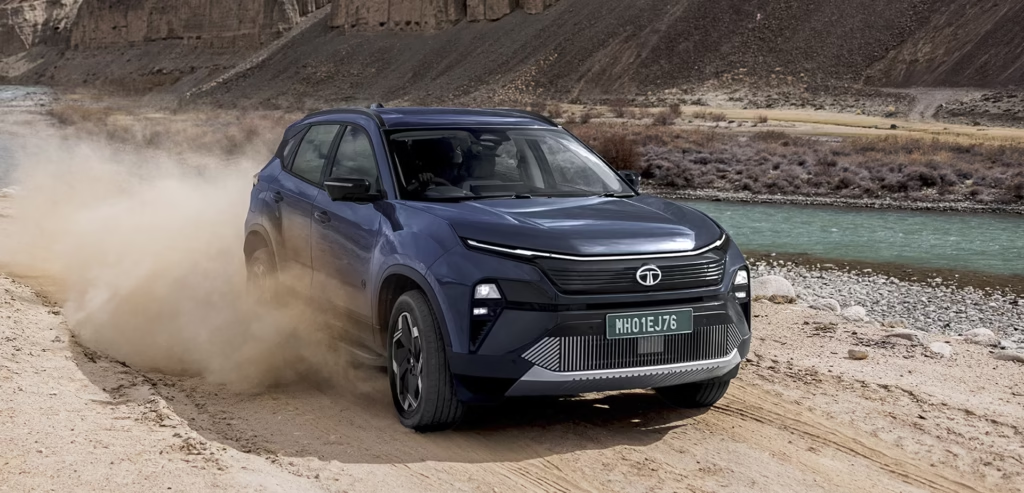
As the electric-vehicle wave builds momentum in India, homegrown manufacturer Tata Motors steps boldly into the premium EV arena with the Tata Harrier EV. Building on the success of its ICE cousin, the Harrier EV combines SUV presence, advanced tech and electric efficiency. In this post we dive deep into what the Harrier EV brings to the table, where it shines, and where you may want to pause before you buy.
Key Specifications & What They Mean
Here are some of the headline figures for the Harrier EV:
- Battery options: 65 kWh and 75 kWh packs.
- Claimed range: Up to 627 km on the largest pack (ARAI/MIDC cycle) in ideal conditions.
- Performance: In the dual-motor all-wheel-drive (AWD) version, the Harrier EV can do 0-100 km/h in about 6.3 seconds.
- Price range (India): Starts from approx ₹21.49 lakh ex-showroom for the base variant, extending up to around ₹30.23 lakh for the top QWD variant.
What this tells us: Tata is targeting buyers who want electric mobility without compromising on space, status, SUV capability or tech. A 600 + km claimed range and sub-7-second sprint time place it ahead of many rivals in the Indian EV market.
Design, Interior & Tech
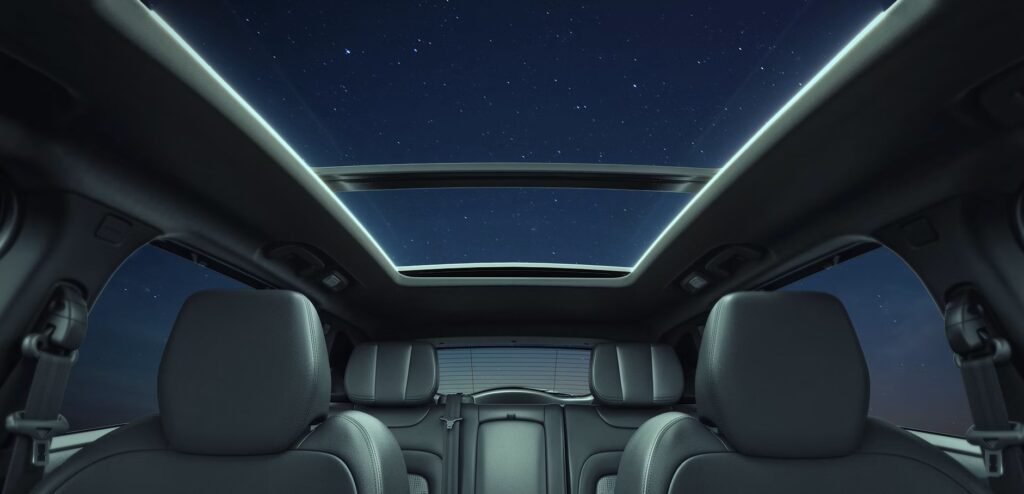
The Harrier EV retains much of the imposing look of the regular Harrier—but with EV-design cues and modern finishes. Inside, the packaging is intelligently done: the battery is tucked into the underfloor, allowing a flat rear floor and generous cabin space.
Electric Boss Mode
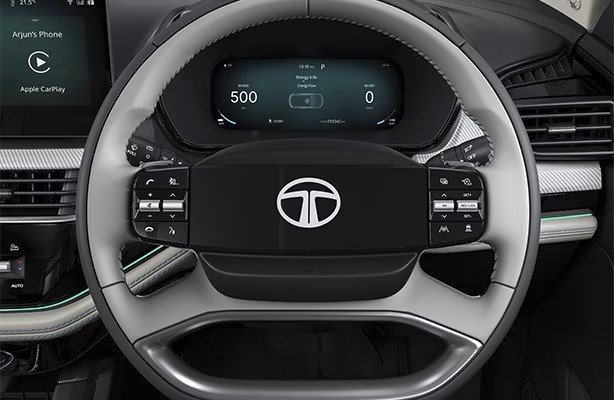
On the tech front:
- Level-2 ADAS suite (adaptive cruise, lane-centering, auto-braking etc) is featured.
- High-resolution infotainment systems, digital clusters, large touchscreen displays, and premium audio + ambient lighting elevate the feel.
- New-gen features like 540° camera view, transparent mode, remote summon, Vehicle-to-Load (V2L) may be present (depending on variant) which add to the “future ready” appeal.

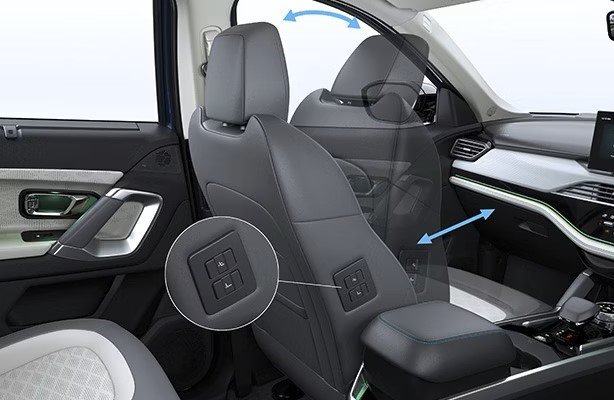
Sliding arm rest and cooled box
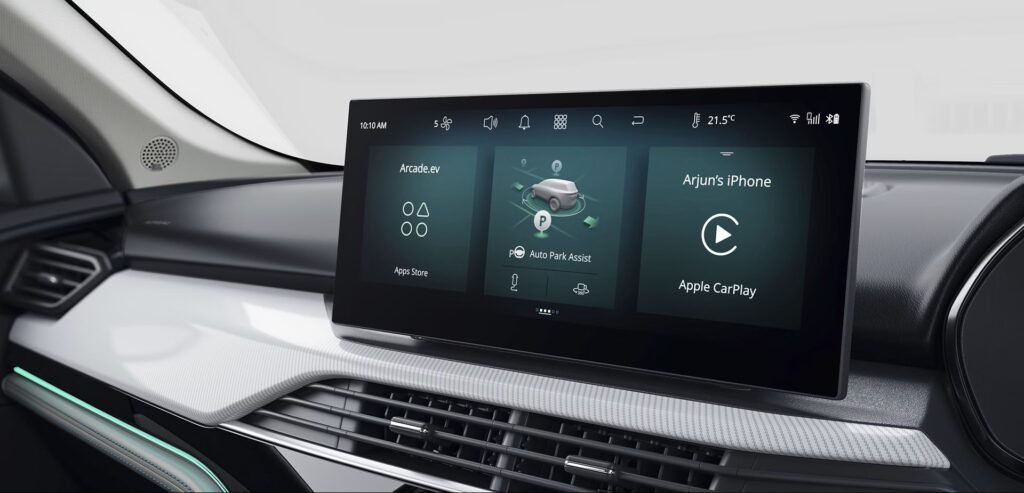
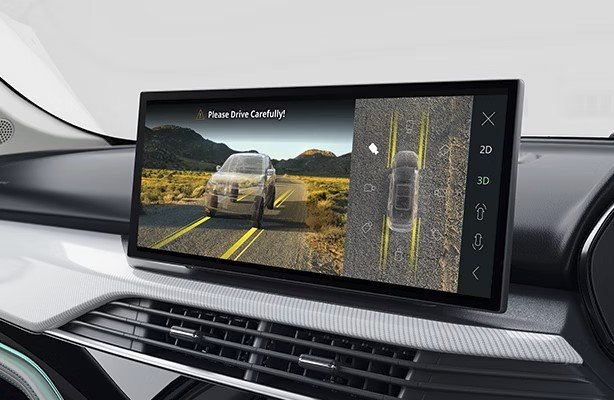
From a usability standpoint, the result is a spacious five-seater (even three adults comfortably across the rear), premium finish and a tech-rich cabin—strong selling points for a family SUV.
Driving Experience & Practicality
On the road, the Harrier EV makes the most of its electric drivetrain: instant torque, quiet acceleration, smooth ride and SUV-like composure. Reviewers note that while its heavy battery weight is felt in some maneuvers, the overall experience is one of polished confidence.
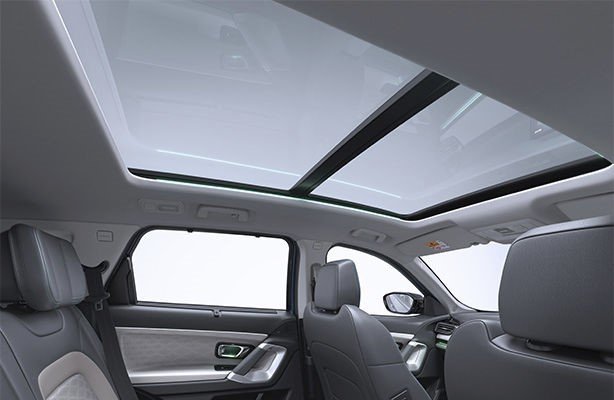
In terms of practicality:
- You get high boot space (≈ 502 litres in some figures) which is commendable for an EV SUV.
- Charging: With a 120 kW DC fast-charger you can get to 20-80% in ~25 minutes in certain variants.
- Real-world range will vary (drivers report ~420-490 km realistic range on the 75 kWh pack) depending on conditions, driving style and load.
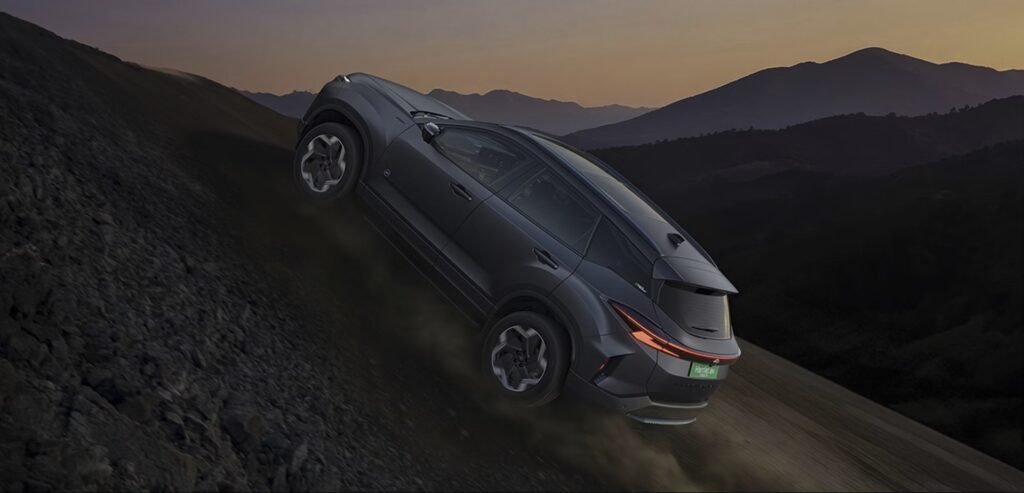
Off-road or rough terrain: interestingly, the AWD variant with dual motors offers genuine all-wheel drive and terrain modes—something not often seen in EVs in this segment.
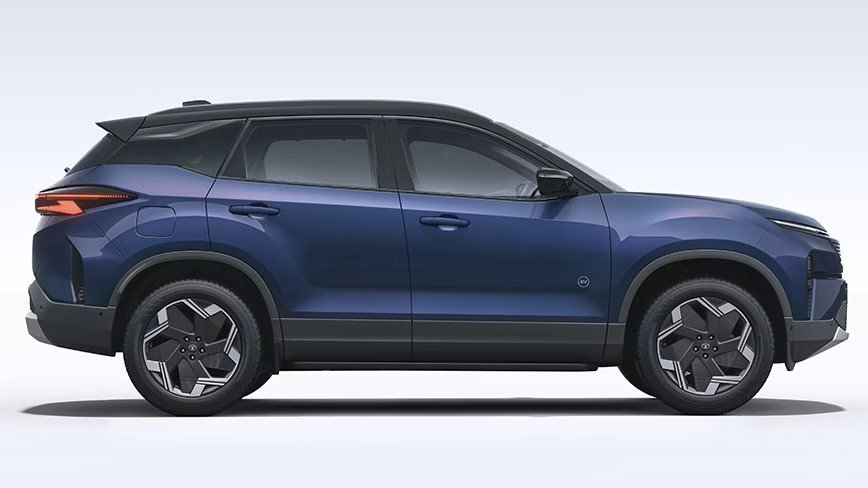
So whether you’re commuting, road-tripping or venturing on less paved roads, the Harrier EV offers versatility.
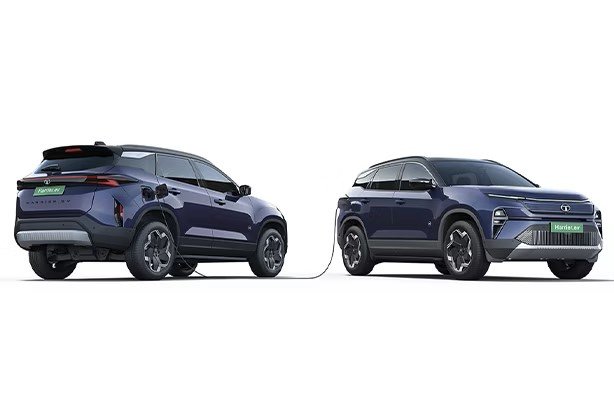
Only Suv in its segment have the car to car charging facility.
Safety & Build Quality
Safety is a crucial factor for SUV buyers and the Harrier EV doesn’t disappoint. It has secured a 5-star rating from Bharat NCAP under new protocols. Features like multiple airbags, ESC, tyres & wheel-brakes designed for heavy EVs and ADAS contribute to its strong safety credentials.
Build quality and finish—especially for a Tata EV—are widely reported to be much improved, giving buyers confidence in long-term durability and ownership experience.
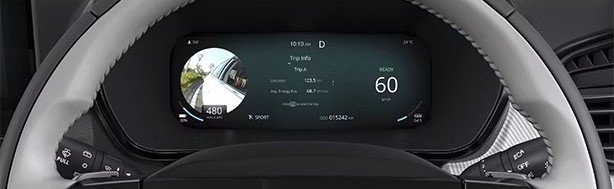
Blind spot monitor.
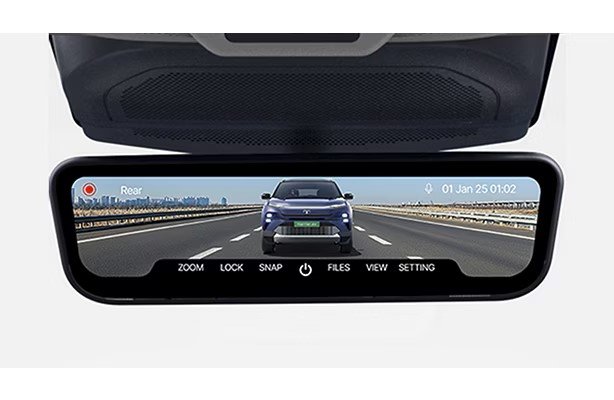
Rear View mirror cum camera
Strengths & Weaknesses
Strengths:
- Excellent combination of range + performance for the segment.
- Rich feature list + premium interior.
- Spacious, family-friendly, and capable off-road if desired.
- Strong brand and safety credentials.
Weaknesses / things to watch:
- Price: While competitive for what you get, the top variants approach premium SUV pricing—so cost of ownership (insurance, charging infrastructure) needs consideration.
- Real-world range will be less than claimed ideal figures—buyers should set realistic expectations.
- Public charging infrastructure in India still variable: for full benefit you’ll want reliable access to fast-charging or home-charger installation.
- Some tech features (summon, ADAS in chaotic traffic) may still show early-generation behaviour.
Verdict: Is It Worth Buying?
If you’re in the market for an electric SUV in India and your budget allows (in the ₹21-30 lakh ex-showroom range), the Harrier EV stands out as a very compelling choice. It hits the sweet spot of space, performance, tech and brand trust. For someone who wants to “go electric” without compromising on SUV norms (size, comfort, features), it is one of the strongest contenders.
However, for buyers who drive extremely long distances daily in regions where fast-charging isn’t yet reliable, or who are very budget-sensitive, it might be worth comparing against lower-priced EVs (albeit with fewer features). Also, ensure you have or can arrange good charging infrastructure (home + public) to extract the full benefit.
For Whom Is It Ideal?
- Families looking for a spacious EV that is usable for daily drives and weekend trips.
- Tech-savvy buyers who appreciate premium features, connectivity and ADAS.
- SUV buyers transitioning to EVs who don’t want to feel like they’re giving up “SUV-ness”.
- Enthusiasts who enjoy instant torque, performance and want a capable all-wheel-drive electric vehicle.
Final Thoughts
The Tata Harrier EV marks a strong statement: India’s electric-SUV market is maturing, and this offering raises the bar. With its balanced mix of range, performance, technology and usability, it could very well be the EV many Indian SUV buyers have been waiting for. For your blog at funcarbox, it represents the kind of vehicle that embodies the transition from “early adoption” to “mainstream EV SUV” in India.
Tata Harrier EV — Model / Range / Price (Ex-Showroom, India)
| Variant (model name) | Battery (kWh) | Drive | Claimed range (km) | Ex-Showroom Price (₹) |
|---|---|---|---|---|
| Adventure 65 | 65 | RWD | 538 km | 21,49,000 |
| Adventure 65 (7.2 kW ACFC) | 65 | RWD | 538 km | 21,98,000 |
| Adventure S 65 | 65 | RWD | 538 km | 21,99,000 |
| Adventure S 65 (7.2 kW ACFC) | 65 | RWD | 538 km | 22,48,000 |
| Fearless Plus 65 | 65 | RWD | 538 km | 23,99,000 |
| Fearless Plus 65 (7.2 kW ACFC) | 65 | RWD | 538 km | 24,48,000 |
| Fearless Plus 75 | 75 | RWD | 627 km | 24,99,000 |
| Fearless Plus 75 (7.2 kW ACFC) | 75 | RWD | 627 km | 25,48,000 |
| Empowered 75 | 75 | RWD | 627 km | 27,49,000 |
| Empowered 75 (7.2 kW ACFC) | 75 | RWD | 627 km | 27,98,000 |
| Empowered 75 — Stealth | 75 | RWD | 627 km | 28,24,000 |
| Empowered 75 Stealth (7.2 kW ACFC) | 75 | RWD | 627 km | 28,73,000 |
| Empowered QWD 75 | 75 | QWD (AWD) | 622 km | 28,99,000 |
| Empowered QWD 75 (7.2 kW ACFC) | 75 | QWD (AWD) | 622 km | 29,48,000 |
| Empowered QWD 75 — Stealth | 75 | QWD (AWD) | 622 km | 29,74,000 |
| Empowered QWD 75 Stealth (7.2 kW ACFC) | 75 | QWD (AWD) | 622 km | 30,23,000 |
Notes:
- ACFC variants above indicate the option bundled with the 7.2 kW AC fast charger (ACFC = AC Fast Charger pack) — price premiums shown accordingly.
- QWD is Tata’s naming for their AWD / dual-motor setup. QWD variants typically show a slightly lower claimed range vs the equivalent RWD 75 kWh due to higher power/weight — see the 622 km vs 627 km values.
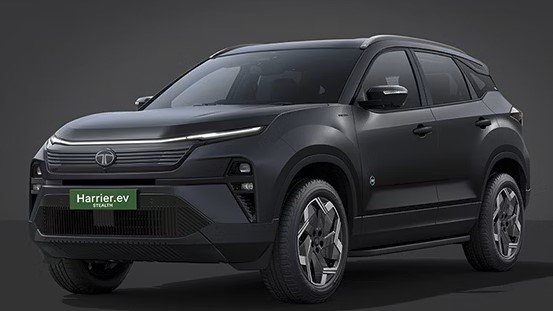
- “Stealth” denotes the matte/dark styling package applied to some Empowered variants and is priced above the non-Stealth equivalents.
Top Electric Cars in India:- Under 25 Lakh Range
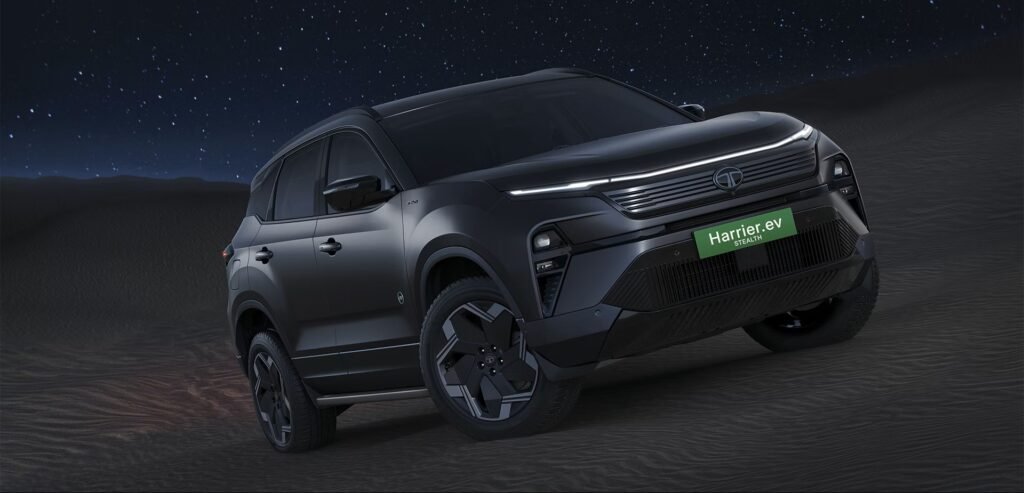
Image credit:- Tata Harrier EV
FuncarBox Verdict:
If you drive mostly in cities, the 65 kWh RWD offers great value. The 75 kWh RWD is the best all-rounder for range and practicality. For enthusiasts or hill-station drivers, the 75 kWh QWD (AWD) delivers unmatched power, grip, and presence — India’s first true electric AWD SUV under ₹ 35 lakh.
Read More:- Mahindra Xuv 9E